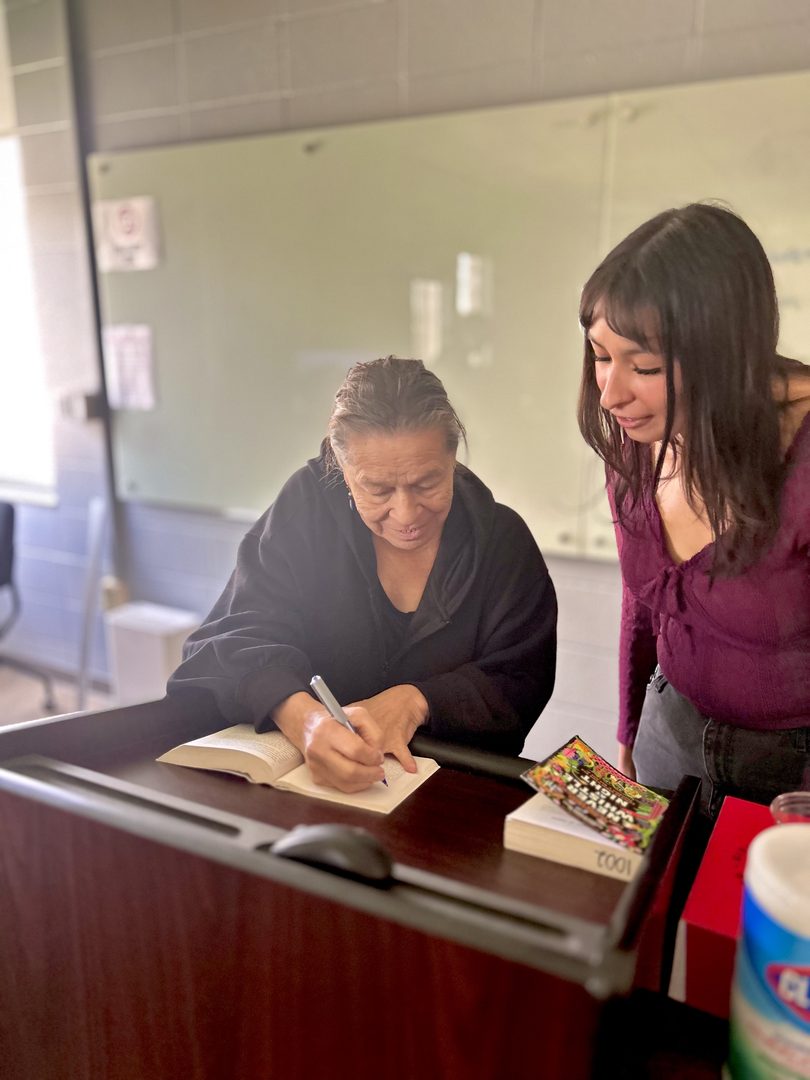
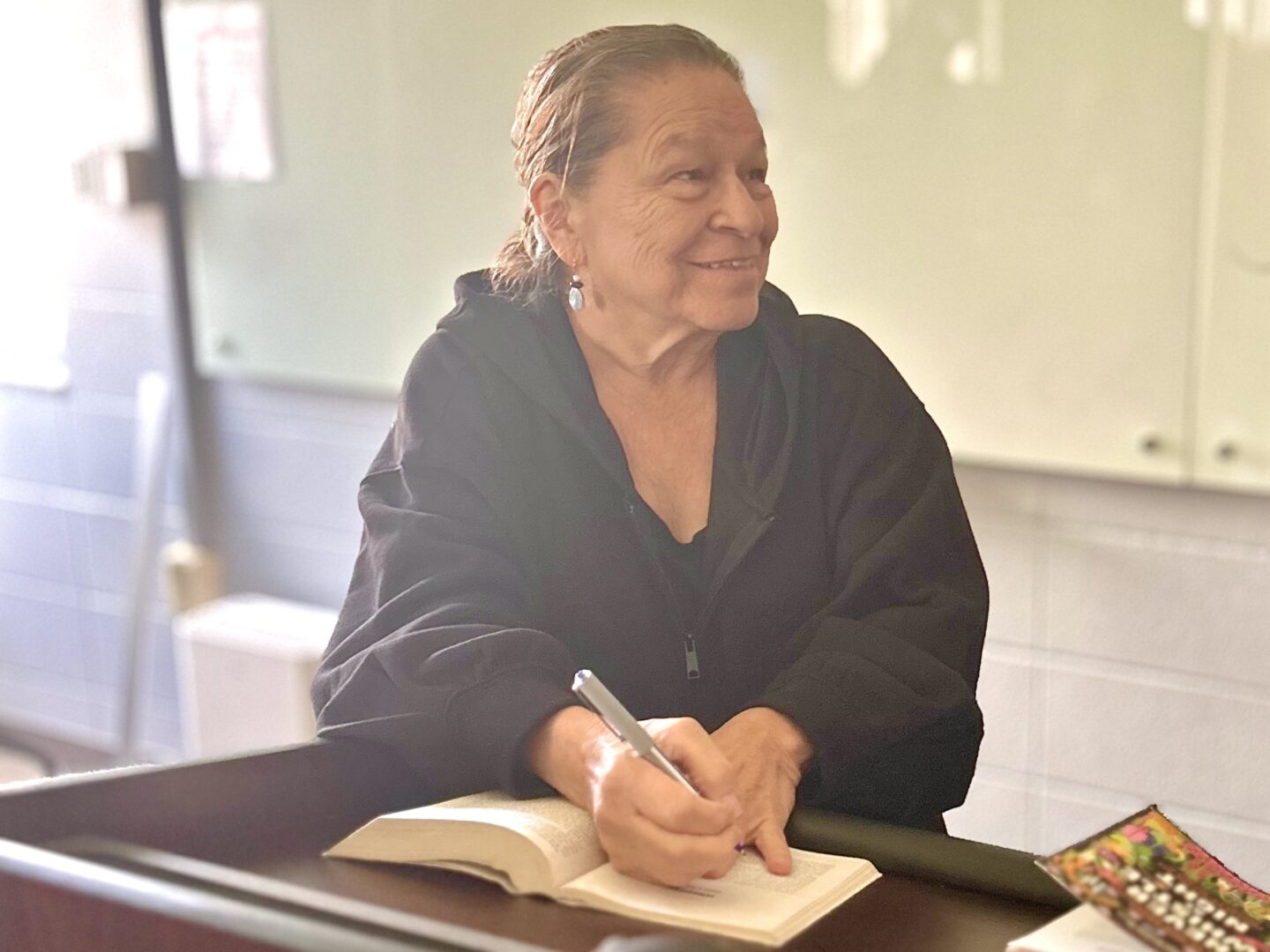
LAWRENCE, Kan. — Author Marcie R. Rendon discussed human cruelty, cultural boundaries and contemporary Native storytelling during a Sept. 22 visit with Haskell Indian Nations University students in Ross Hall.
Rendon, an enrolled member of the White Earth Nation, spoke to 24 students from two combined classes. Among them were students in American and Indigenous Horror Studies, taught by Northern Paiute and Blackfeet English instructor Michelle Sturges-Brown.
Rendon discussed “Wingless,” her contribution to the Indigenous dark-fiction anthology “Never Whistle at Night,” along with her broader experiences as an author, poet and playwright.
Rendon said she intentionally grounded the horror of “Wingless” in human cruelty rather than presenting the spirit world as the source of evil. She explained that spirits are not inherently malicious and that people are capable of much greater malice.
When asked whether “Wingless” drew on personal experience, Rendon explained that she was placed in foster care as a child. However, she emphasized that the story was fictional, allowing her to explore abuse, revenge and the harm people can inflict on one another.
Rendon also revealed that the anthology’s editors created the title “Wingless,” explaining that she rarely titles her own writing.
Questions from students led Rendon to discuss the responsibilities involved in sharing Native stories with a wider audience. She talked about refusing to write about medicines and details of certain ceremonies because not all cultural knowledge is intended for publication.
While discussing “Sinister Graves,” part of her Cash Blackbear crime series, Rendon focused on the Wendigo, which she described as a dark spirit connected to a traditional belief. She initially removed the Wendigo because she worried “white” readers might misunderstand its cultural meaning and treat it as a stereotypical fantasy figure or piece of folklore. Rendon later restored it after realizing the story no longer made sense without it.
Rendon said her primary goal is to entertain readers rather than teach outsiders about Native traditions. However, she wants her contemporary work to remind readers that Native people are part of the present.
“We exist now,” Rendon said.
Haskell student Isabelle Blackwood said Rendon’s words challenged the outdated way some people continue to view Native Americans.
“When they think about Native Americans, they’re not thinking about people like you or I,” Blackwood said. “They’re thinking about the Native Americans on a hill in a cowboy movie. They’re thinking about something from a textbook.”
Before establishing her writing career, Rendon studied prelaw but decided that working behind a desk would have made her miserable. She later worked in a prison education program, teaching adult basic education, GED courses and pre-release preparation.
Rendon revealed that she was once so shy that speaking to others could make her cry. Her mentor challenged her to improve her public-speaking skills so she could promote her writing, reminding her that no one would advocate for her work better than she could.
Her path to publication required persistence. Rendon’s first novel was rejected repeatedly for five years. When she was ready to stop submitting it, a friend encouraged her to try one more publisher, which accepted the manuscript.
“If this is what you’re driven to do, do it,” Rendon said.
Rendon also encouraged writers to value their labor, telling students, “Always get paid for your work.”
Rendon concluded the visit by giving students two writing options. Students who chose to write a short story responded to the question, “What scares you inside of you?” They were then challenged to bring an inanimate object to life and use it to make their stories more frightening.
Students who preferred poetry began with the line, “You bring out ___ in me,” filling in the blank and using it as the starting point for their poems.
Haskell student Gabriella Phillips said Rendon’s persistence through years of rejection left her with a simple message about pursuing creative work.
“Keep trying. Just keep trying,” Phillips said.